

What Bulb Is Safe to Use in a 3D Printed Lampshade?
DrMaker3DShort answer: use an LED bulb, and only an LED bulb. 3D-printed lampshades are made from plastic — most often PLA or PETG — and the single most important rule for using them safely is keeping heat away from that plastic. LED bulbs run cool, which makes them the only bulb type we recommend for any 3D-printed shade.
Here's exactly why, and how to choose the right one.

Why bulb type matters for 3D-printed shades
The plastics used in 3D printing are wonderful for statement, detailed lampshades, but they soften at relatively low temperatures. PLA, the most common filament, begins to soften somewhere around 50–60°C (120–140°F). That's well below the surface temperature of a traditional incandescent or halogen bulb, which can climb past 390°F (200°C).
Put a hot bulb inside a plastic shade and, over time, you risk warping, drooping, or in a worst case, melting. The fix is simple: choose a bulb that barely gets warm.
Use LED — and skip these
✅ Recommended: LED bulbs. Modern LEDs produce light with very little heat. They're energy-efficient, long-lasting, and stay cool enough to sit safely inside a printed shade.
❌ Avoid: incandescent and halogen bulbs. Both throw off significant heat and are not safe for plastic shades. Compact fluorescent (CFL) bulbs run cooler than incandescent but still warmer than LED — we'd stick with LED.
What wattage should you choose?
With LEDs, "wattage" is less about heat and more about brightness, but it's still smart to keep things modest. A good rule of thumb for an enclosed or semi-enclosed printed shade is an LED bulb rated around 8–10W or lower (roughly a 60W incandescent equivalent in brightness). That gives you plenty of warm, ambient light without pushing heat or driving the bulb's own components hot inside an enclosed space.
If your fixture or bulb packaging lists a maximum wattage for enclosed fixtures, follow it.
A few extra tips for a long-lasting shade
- Give the bulb a little breathing room. Our shades are designed with airflow in mind, but it never hurts to make sure the bulb isn't pressed directly against the plastic.
- Choose your light color on purpose. A "warm white" LED (around 2700K) flatters most living spaces; "cool white" reads more modern and task-focused.
- Check for "enclosed fixture rated" LEDs if your shade fully surrounds the bulb — these are built to handle the slightly warmer air inside a closed shade.
- Dimmable? If you want to dim, pair a dimmable LED bulb with a compatible dimmer switch.

The bottom line
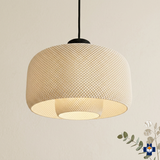
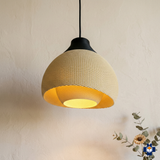
A 3D-printed lampshade gives you a one-of-a-kind, statement light you simply can't buy mass-produced — and keeping it beautiful for years is as easy as choosing the right bulb. Reach for a low-wattage LED, skip anything that runs hot, and you're set.
Every pendant light and shade in our Pendant & Ceiling Lights collection is designed with LED bulbs in mind. Browse the collection to find your style.
Have a question about a specific shade or fixture? Message us — we're happy to help you pick the right setup.


